

Read and Follow on Substack
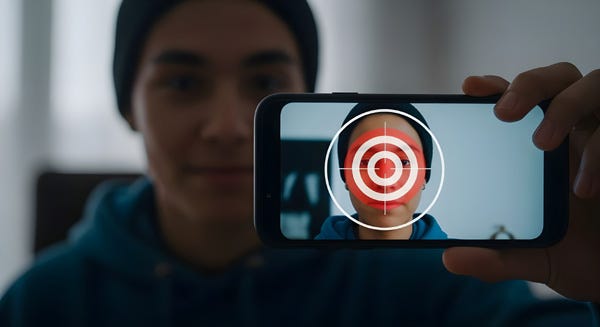
Facebook is in a state of decline, characterized by a loss of daily users and ad sales, and contributing to that decline is its “video selfie” identity program.
Not only is Facebook suffering from decreased engagement, a negative perception among a younger audience, and a drop in ad revenue, but requiring a video selfie to prove one is a real person has caused a growing number of users to drop out.
That’s because the system is locking out real people since the picture taking feature doesn’t work very well.
That even happened to me after I had an account for over 20 years, and my multiple attempts to get the account back didn’t work.
The Loss of Facebook Users
This loss of users is huge. While Facebook has about 2.11 billion daily active users and around 3.07 billion active users each month, according to internet stats, it has recently lost about 500,000 daily users according to the Washington Post. The result is declining stock prices, lower ad revenues, and a growing number of users expressing dissatisfaction with Facebook’s policies and practices.
The Vast Number of People Affected
Facebook’s selfie-program is a major source of this loss of users affecting millions of people. A U.S. local tech segment reported that “some 110 million people” get locked out of Facebook accounts annually, many due to selfies. According to Meta, it deleted about 10 million accounts in the first half of 2025 for impersonation, spam, and fake engagement — an aggressive enforcement environment that has made false positives in its selfie program more likely.
How the Self-Program Works – Or Doesn’t
To provide your identity, you are asked to record a short selfie in a circle while you turn your head up, right, or left according to a series of random arrows. Then, Facebook uploads a file with your image, sees if it meets its criteria for an acceptable image, and if not, you may be asked to retake it or receive a decline.
Meta has set up this system to avoid people setting up fake accounts, but many real people can’t pass the test. Even people with longtime accounts may suddenly find they have to prove they are a real person due to using their account in a way that draws Facebook’s attention. Then, they have to go through this selfie process, and if they can’t pass the test, they lose their account, may find it difficult or impossible to appeal the decision, and can’t speak to anyone personally to restore their account.
How the Selfie Program Began and Led to Real User Lockouts
Facebook began testing the video selfie verification process to curb scams, deepfakes, and large-scale impersonation campaigns and fake IDs. But in practice, the system is glitchy—and once it fails, appeals can stall for weeks with no human follow-up or there is a lack of response. While it was used to restore access to accounts that were compromised or locked due to suspicious activity and to prevent bot creation, the program ended up locking out real users and raised other concerns. These main causes of user loss and frustration are these, according to reports on Google:
Failed verification leads to permanent lockout: A high number of users have reported that after submitting a video selfie, the system either rejects it or fails to process it correctly, resulting in their account being permanently disabled. For many, this process has no clear pathway to appeal.
Technical glitches and poor support: Numerous complaints cite technical issues where the video upload button fails to work or the process gets stuck in a loop, further frustrating users. In many cases, users find themselves with no access to human support to resolve their problem.
Loss of personal content: When accounts are locked or disabled, users lose access to their personal photos, messages, and memories. This permanent loss has caused some to give up on the platform entirely.
Lack of transparency: Many users are frustrated by Facebook’s lack of clear communication on why their video selfie was rejected or why their account was disabled.
Privacy and data collection concerns: The video selfie feature has fueled significant privacy concerns and distrust in how Facebook handles user data. Many users required to submit a video selfie to access their account, fear that Facebook is collecting their biometric data for other purposes.
Other Factors Contributing to Facebook’s Decline
While the video selfie program has led to Facebook’s decline, some other factors are these:
Competition from other platforms: Facebook has faced strong competition from newer, more engaging social platforms like TikTok and Instagram, also owned by Meta.
Changing user demographics: Young people have been leaving Facebook for other platforms, changing the site’s overall demographic.
Negative public perception: Widespread media coverage of privacy violations, misinformation, and other controversies has damaged public trust in Facebook and led to a decline in user growth.
The selfie program adds to these other factors, helping individuals decide to leave Facebook.
My Experience with Facebook
I had already been using Facebook less and less, when my lockout helped me realize I wasn’t losing much by leaving Facebook, since I was already having a better experience on many other platforms, including Instagram, LinkedIn, and many groups using Zoom and Google Meetup for regular get-togethers.
In my case, the loss of my Facebook connection began when I signed up for a private Facebook group and Facebook wanted to send a verification code to my email. But after I invited Facebook to do so, I discovered someone else’s email on my account, indicating it had been hacked, but I never realized it before, since I had used my account regularly without signing out. So now I couldn’t sign back in and lost that account.
Yet I had another account under my company’s name, with my company’s initials for the logo. I hadn’t used the account for five years, but at least I could sign-in and use it for connecting to several Facebook groups I belonged to. So I began adding personal contacts, and initially Facebook helpfully suggested people to invite, though I could only invite up to four or five people a day, or I would get a notice that “You can’t use this feature now.” At least the invite feature seemed to work well, as I built my account up to 80 participants by inviting people who I knew or had two or more other friends on Facebook.
But then I got the dreaded “take a selfie” request, because I clicked on one of the people that Faceboo
k suggested I invite as a friend, and I was advised that “It doesn’t seem like you know this person.” Then, I made another two invites. But on the third one, I got the “You can’t use this feature now” response, and moments later, I got a notice that ‘Your account has been suspended for inappropriate activity.”
Now if I wanted to appeal, I had to take a selfie. And that, I found, proved to be impossible. Repeatedly, I tried to take a picture by positioning and repositioning myself, moving a little further away from my computer each time, so my face would fill the circle, and I could better turn right and left for a side view.
But each time, I got the “retake” response, and I was left wondering if I turned far enough or fast enough to be in the proper position.
I finally gave up trying to take a picture and restore my account myself. Initially, I had a VA create an account for me with another one of my emails, and I used a second computer to access it, since the original one was linked to my declined Facebook account. The new account worked for a time. However, the VA was in India, so I had a news feed with news and images from India, though I was able to post a few messages to say, “Hello, I’m here,” Unfortunately, this other computer had a sporadic Internet connection, because it was a Win10 computer, and at times, I couldn’t connect to my Facebook account and had to sign in again. For a few days I could sign in without the selfie requirement, perhaps since the account was set up in India where a personal verification was less needed. But after a series of internet outages and failed attempts to sign in, I got the dreaded selfie prompt. So once again, I couldn’t access my Facebook account.
After that, when a friend tried to set up an account using my phone number and a different email, that didn’t work either. After I briefly put in a code number on my phone, Facebook still wanted a selfie, and after my friend’s girlfriend tried taking the pictures and at first passed the test, the account was declined, though, as is commonly the case, Facebook gave no reason for its decision to ban an account.
I even tried writing to appeal, sending my appeal to several emails listed on Google for appeals: appeals@fb.com, support@fb.com, and disable@fb.com, explaining what happened.
But that effort to appeal didn’t work either, since the support@fb.com account was full, so the message never got to Facebook, and I didn’t get a response from the other emails.
Thus, that decline coupled with Facebook’s lack of response was the final straw, which led me to turn to other social media accounts – Instagram, X, TikTok, and LinkedIn, and to investigate whether what I experienced with Facebook was experienced by others.
The Many Problems of Others with Facebook
As I quickly learned, there were many group chats on Reddit and other platforms where people complained about losing their accounts due to the new system. Commonly they lost their accounts after they were asked to verify themselves with a selfie and couldn’t do it or didn’t want to, because they felt taking the picture was an invasion of their privacy, believed the images could be used for devious purposes, or otherwise felt so angry about the system that they decided to leave Facebook.
Here is a sample of their responses:
“Facebook is now forcing me to provide a video selfie to get back into my account. Something seems fishy
I created an account and it IMMEDIATELY got suspended and now Facebook is asking me to take a selfie of myself?!?!?”
“Facebook requires me to upload a video selfie to prove I am human, but I am on a pc and do not have a camera. how do I bypass this?”
“My 20-year-old Facebook account was suspended, and Meta was demanding “video selfie.”
“Why is Facebook asking my 78-year-old mother who doesn’t have a webcam for a video selfie?”
“What in god’s name is this? I decided to make a Facebook account for the first time, and they asked me make video identity tests and a lot of other crap.”
“New account video selfie verification not working? Anyone else having this issue?’
“Facebook disabled my account, asked for a verification selfie, then permanently deleted my account.”
“I failed the video selfie verification; will I ever get a second chance?”
“Facebook declined my verification selfie video and banned my account.”
“I was asked to upload a video selfie and then what? My account is still suspended and nothing is happening.”
“I was suspended over the lack of a full facial selfie in my profile picture? That is the only thing I can think of at this point.”
“My Facebook account was suspended with no way to appeal?
“My Facebook account got suspended. Please help because I don’t know how to proceed from here.”
“I opened a FB account, and after 2 days it was officially suspended, what gives?
“Facebook suspended and will disable my account in 180 days if I do not do anything. My response to Facebook and their new rule for a fucking damn selfie. “
Detailed Response to the Facebook Selfie
After looking at all these short complaints, I saw one response that seemed very much like what happened to me.
“Looks like a lot of people are in the same boat. I’ve been using FB for around 20 years, with no warnings or anything before. I don’t post much on my personal account, nothing inflammatory, and I’m the admin of a number of large groups, some of which have 50k+ people. The only “reason” I can think of for my ban is that I often post anti-AI stuff on FB and report a lot of offensive posts/comments as well as AI adverts. Anyway, I received the following email:
“Hi…
“Your Facebook account has been suspended. This is because your account, or activity on it, doesn’t follow our Community Standards on account integrity.
If you think that we’ve suspended your account by mistake, you’ll have 180 days to appeal our decision. If you miss this deadline, your account will be permanently disabled.”
Summing Up: Why the Selfie-Program Is Resulting in Declining Facebook Users
To sum up, Facebook’s selfie program is contributing to its decline in users because the process is frequently flawed, often rejects facial uploads without clear reasons, and makes it virtually impossible to appeal or get support. Many users report that their accounts were locked, suspended, or disabled after failed video verification attempts, and they were frustrated by the lack of recourse. The issues are particularly prevalent for users with older accounts and new account registrations. And individuals who lost their accounts commonly found it difficult to contact support without an active account. Here’s a summary of these common complaints:
High rejection rate: Video selfies are rejected multiple times, even when individuals follow instructions.
Lack of appeal: Rejected verification attempts are commonly final, with no option to appeal the decision.
No support: It’s difficult to get support to resolve issues, as many users are locked out of their accounts and cannot access the help center.
Account lockouts: Users’ accounts are suddenly locked or suspended, and the video selfie is the only way to regain access, but that often doesn’t work, lead former Facebook users to feel frustrated and lose their personal data in their account.
Technical glitches: The upload button doesn’t work, and videos won’t upload for many users.
New account quickly disabled: As a last resort, some users have created new accounts, but even these are sometimes disabled immediately after creation.
Spam/scam concerns: Some users are worried about Facebook collecting facial recognition data through the process, with fears it could be used for other purposes without consent.
The Failure of the System to Get Rid of the Bad Actors
Thus, while the system repeatedly fails regular users whose accounts are suspended or permanently disabled, bad actors have been able to exploit or bypass video-selfie checks. Underground tools openly advertise “video stream spoofing” to pass Facebook’s selfie verification for multiple accounts, and forum posts and Facebook group discussions also circulate tips on working around the selfie prompt. So determined abusers have been able to adapt and get through the system, while legitimate users are repeatedly shut out.
In short, Facebook’s selfie verification attempts to solve a real problem—mass impersonation and account theft—but it suffers from ineffective automation, limited recourse, and spoofing tools that erode its deterrent value. Until Meta offers reliable human review and transparent error remediation, the system will keep locking out real people while motivated scammers probe the gaps
How You Might Be Able to Recover Your Account
Although these approaches don’t always work, here are some suggestions I received from various sources:
Start with the official portals—on a known device. Use facebook.com/hacked from a phone/computer you’ve used before; logins from “familiar” devices can help. If you see the selfie prompt, follow the motion cues precisely (neutral background, bright front-facing light, clear camera image).
Don’t use “unlock” services. Third-party “recovery” services may send you an offer, but they often harvest your data or don’t work.
Avoid some of the actions that might trigger a selfie request. Turn on 2FA for critical accounts, store backup codes safely, and avoid mass friending bursts right after a recovery, since these behaviors can retrigger risk checks. Industry reports show scammers are constantly probing verification systems; minimizing risky patterns helps you avoid red flags that trigger a selfie-prompt.
For more information and to set up interviews;
Karen Andrews
Executive Assistant
Changemakers Publishing and Writing
San Ramon, CA 94583
(925) 804–6333